Monday, February 27, 2012

BACKGROUND REPORT: Transgender Awareness


This was a secret that appeared on the postsecret.com website this weekend. Post Secret is a project started by Frank Warren where anyone can anonymously send in their secret/s on a postcard and he will post them to his website or publish them in a book. This is just one example of how prominent the subject of Transgender is in our society. Something that is often overlooked.
So what is Transgender?
This is a very straightforward and informative website from the American Psychological Association that answers questions people have about Transgender people, gender identity, and gender expression. Take some time to look through the site and get a background for the topic.http://www.apa.org/topics/sexuality/transgender.aspx

This is a representation of the Transgender symbol; it links the universally accepted symbols of male and female into one entity. It includes everyone, and excludes no one. The butterfly symbolizes transformation.
Why do we care?
Stories of transgender individuals are popping up all over the media. These cases are raising questions and sparking debates all around the country.
The Case of Thomas Beatie
In 2008, society was confronted by some startling images and news stories; a pregnant man.
Thomas Beatie is a Female-to-Male Transsexual. He legally changed his sex to male, and has now given birth to three children. This is a fascinating interview by Barbra Walters after the birth of Thomas’ first child. http://abcnews.go.com/2020/video?id=6259840
Transgender is one of the taboo topics in society. But there are many concerns especially regarding discrimination in the job market and at work. Even in the interview, Thomas Beatie received numerous hate messages.
Offensive tampon ad?
Check out this article describing the controversies surrounding a new tampon ad (which has since been removed from YouTube). http://www.nzherald.co.nz/television/news/article.cfm?c_id=339&objectid=10776378
Some important questions it raises:
-what defines a woman?
-is this offensive? why or why not? (the comments section is pretty interesting)
Our Position:
There should be more public awareness and recognition for transgender people to nationalize anti-discrimination laws as well as possible insurance coverage for sex change operations and treatments.
Pros:
-a higher employment rate for transgender individuals.
-potential better mental health and well being for transgender people.
-lower poverty rates for transgender people.
-less harassment toward transgender individuals, and more understanding about them for everyone.
-stability and equal opportunity for transgender people to get housing
- insurance coverage for individuals requiring a sex change

Some links to check out:
(Here are some cut and dry laws regarding transgender individuals in various states and cities.)
(Take a look at this National Transgender Discrimination Survey, it states more statistics to get an idea of the number of people affected.)
(This article is good to glance through, it states some discrimination examples against gender identity in the housing market and health care.)
Cons:
- Transgender individuals should not be allowed insurance coverage for sex changes and treatments, because it is an elective surgery.
- Transgender people should not be allowed to live wherever they want if it makes those around them uncomfortable.
- Employers should not be obligated to adhere to anti discrimination laws involving transgender individuals.

This will be a good background for Thursday’s debate, and a supplement to Sexing the Body.
Written by The Ghosts in the Machine: Quinn Carr, Elissa Mann and Andrea Kerrigan

Seven Deadly Sins Explores Sexual Disorders

Statement from the Seven Deadly Sins: Sex addictions and sexual disorders are products of psychological and physical abnormalities within the human brain and body. They are not products of society, but are in fact perpetuated and scrutinized within social paradigms for the purpose of evaluating the people that they affect.

This background report is a profile of several sexual disorders, including sex addictions and paraphilias, restless genital syndrome and sexsomnia. These disorders are controversial and the subject of debate amongst medical and psychological professionals as well as to social scrutiny as to what qualifies a sexual habit to be a “disorder.” These issues encompass many of the constructionisms and assumptions as well social paradigms, conflicting beliefs on causations of disorders and the underlying implications for society that a sexual disorder can present.

Sex addictions and paraphilias are controversial due to the social implications that they create. Sex addiction is a debated topic amongst psychological professionals, and currently it does not meet the DSM IV paradigm for a “mental disorder,” leaving it unclassified as an addictive behavior. This relates to the material covered in Anne Fausto-Sterlings “Sexing the Body” for it is a direct example of how certain facets of sexuality fit certain paradigms, while others fail to be approved by society for a particular paradigm. It affects roughly 8% of the United States male population and 3% of the female population.
Causes
Sex addiction can be described as addictive behavior manifesting itself as the insatiable desire for sexual intercourse and other sexually fulfilling activities. A majority of studies are indicative that sexual addictions begin in adolescence and young adulthood and are typically the product of sexual abuse or rape during the victim’s childhood.
Symptoms
Addictive behaviors include extramarital affairs, excessive masturbation, visits to strip clubs and massage parlors, prostitution, hiring of prostitutes, high risk unprotected sex, porn addiction, multiple partners and in extreme cases, molestation and rape.

The neurological approach to sex addiction views it as a manifestation of addictive behavior in the form of uncontrollable sexual impulses. Sex addictions can be attributed to chemical imbalances in the brain, namely the hypothalamus, the pleasure center of the brain. Administration of antidepressants as well as other psychotropic drugs has yielded positive results for the afflicted in the control of their urges and symptoms. This is indicative that the problem is simply an imbalance within the brain and is treatable with the appropriate medications. The psychological approach to sex addictions is based primarily in talk therapy, where the victims of the disorder are encouraged to talk about their urges and discuss methods of controlling them. Talk therapy often seeks to discover underlying psychological causes for the addictive behavior, such as sexual abuse suffered by the addict during childhood. There are also variations in the social viewpoints of sex addictions. Sex is a huge part of social culture, and as demonstrated in a Billion Wicked Thoughts, there is a high availability of porn and other sex tools for addicts that can cause a subtle problem to proliferate, thus making sex addictions products of a sex-centric society. These various approaches to sex addiction as a disorder make it a highly controversial topic that has yet to be fit into a paradigm in the medical and psychological spectrum of disorders, but we believe that sex addiction can only be perpetuated by the availability of outlets such as porn and strip clubs, the root cause of the problem lies within the addicts brain, and is not created by exposure to sexual imagery or encounters.

Case Studies
1. A minister in his 50’s had spent over 10 years of his career having sexual affairs with female parishioners who had come to him seeking counseling. He eventually stopped the affairs, but several women came forward and exposed him, causing him to lose his standing in the church and suffer public humiliation
2. A homosexual man in his late 20’s spent several hours every day walking around parks and other public areas in search of sexual partners. His obsession was having sex with as many anonymous partners as possible, and despite his fear of contracting HIV and eventually getting aids, his addiction to sex was too powerful to be overcome by these fears

More stories and accounts available at:
http://www.jenniferschneider.com/articles/family_disorders.html

Paraphilias are described as the perversion of sexual desire as well as abnormal sexual obsessions.

Examples of different paraphilias:
Pedophilia (desire for children) exhibitionism, fetishism (desire for or attraction to non-sexual, non-living objects), masochism, voyeurism (peeping), sadism (pain or humiliation) and necrophilia (attraction to corpses).

Paraphilias are highly controversial due to the potential threat that they can pose to society as well as the unorthodox, socially unacceptable behavior that they envelop. Pedophiles are seen as a menace to society due to their sexual desires for children, and other paraphilias are often utilized in gritty TV shows, notably Law and Order SVU.

Paraphilias and Society
Recently, the Internet has allowed some pedophiles to justify and normalize their feelings by offering them chat rooms and social networking abilities to share their problem with fellow pedophiles. This allows pedophiles to challenge social constructions that their urges are “bad” and instead offer justifications for their sexual feelings by being able to identify with others that have the same urges.

Treatment
Paraphilias, unlike sex addiction, are defined by the DSM IV and have concrete criteria for their diagnosis. Treatment of paraphilias include various forms of talk therapy and drugs to control sexual desires including hormone therapy.


Sexsomnia
We are limited in the way which we view the world because of language. However, despite languages obvious limitations, is there a creative force behind words? So your partner seems to have--or want to have-- sexual relations in their sleep (consistently)? What potential consequences could arise? Is this a far reaching epidemic? In 1996 language used its inventive powers and the sex “disorder” Sexsomnia was born.

http://www.youtube.com/watch?v=WZh7F_YHfSc

Kinsey describes a wide range of variation in human sexuality that is present even when we are asleep. Sexsomnia is caused by a chemical imbalance in the brain or previous psychological damage; the physical pleasure of sleep sex is hardly of concern, as the patient is completely asleep. Evidence of this problem being purely psychological, and not pleasure based, is evident in many cases:

1) A 34-year-old married man would spontaneously masturbate to ejaculation every night after he had been asleep 2–3 hours, and was not arousable. Nightly sleep masturbation occurred while he continued to engage in sexual intercourse with his wife every night before falling asleep.

2) A 26-year-old married woman had a history of abruptly tearing off her clothing and masturbating violently during the first half of the night. Her masturbation was associated with soft to loud vocalization and occasional vaginal discharge. If her husband interrupted the episode of masturbation, it might recur a second or a third time during the night. Any attempt to initiate intercourse after she was awakened was rejected, and she denied the behavior

3) A 26-year-old woman would initiate foreplay with her bed partner while they were both asleep between 02:00 and 05:00 and would utter sexually provocative phrases while fondling him. Whenever he responded positively to her involuntary sexual overtures during sleep, she would then awaken and accuse him of forcing sex on her while she slept.


Further examination of sexsomnia being purely a psychological disorder is evident in other case studies where heterosexuals engaged in homosexual behavior during an episode of sexsomnia.
This leads to the basic question of whether sexual orientation is inherent or developed, Nature vs Nurture. Anne Fausto-Sterling’s commentary on Nature vs Nurture is especially relevant to this topic. When we aren’t conscious (asleep) are we concerned with societal rules that define a gender construct permanently? What does this tell us about true sexual nature? If heterosexuals are engaging in homosexual behavior, is essentialism or constructionism a more fitting model (AFS 17). Examining homosexual acts exhibited by those with sexsomnia offers more evidence for a culturally derived definition of desire and sexuality. Furthermore, it gives evidence that these sexual disorders do stem from chemical imbalance and possible previous psychological trauma. Modern stigmas associated with homosexuality make it very difficult for people to come out and live their lifestyle, therefore, why would a heterosexual knowingly engage in homosexual behavior (homosexuality is a choice opinion)? This shows that the physical pleasure aspect of sexsomnia is irrelevant because of the enormous risk a heterosexual takes by performing homosexual activities. The problem must be psychologically derived and bears little notice to received pleasure.

Society’s views on sexsomnia also legitimizes it as a psychiatric illness. The anti-anxiety perscription drug clonazepam is considered the common cure. This drug is also used to treat bi-polar and depressed patients as well. Sexsomnia has also been cited in legal trials. There have been people that have used sexsomnia to defend rape and molestation allegations. The first paper to identify and coin the term “sexsomnia” described a few of these cases in which people were charged with sexual assault (initiated while sleeping) and after data showing “sexsomnia” tendencies, they were aquitted! Mentally ill aquittals require specific standards to be met and can be seen here: http://www.pbs.org/wgbh/pages/frontline/shows/crime/trial/faqs.html

Could sexsomnia lead us to more realizations about our sexuality and human desire? Although the majority of victims of the sexsomniacs had negative response to their partner (or assailant), some positive outcomes were noted:

1) A woman who slept with a sexsomniac boyfriend commented on how he was a “different person during these activities—apparently, he is a more amorous and gentle lover and more oriented toward satisfying his partner when he is asleep.

2) One woman commented that her boyfriend's sleepsex was more “aggressive and dominant” than his waking sexual behavior, and she “found some aspects of the sleepsex pleasurable…and a little kinky,” such as “forceful albeit playful biting and ‘talking dirty,‘ but “nonetheless she requested that the patient incorporate some of the nighttime sexual practices...into their conscious daytime lovemaking.

What could the above two examples tell us about our own sexual nature? As Ogaddam reiterated, we are a culture where the majority of us (based of porn searches) have a kinky sexual side or a curiosity into the unordinary. Many of us in class brought up the point that statistics cannot generalize humanities sexual desires. However, sexsomnia offers a unique view into the unconscious and has reinforced Ogaddams generalization, in this specific case at least.

Sexsomnia’s recent emergence has left much up to debate, as extensive testing and case studies has yet to be done. The leading researcher, Carlos Schenck, is from the University of Minnesota! Sexsomnia has been prevalent in the media as well. Hopefully, with more people being informed on sexsomnia, more case studies will emerge providing us with a better understanding of this psychiatric disorder. Or are these people just horny?

http://www.msnbc.msn.com/id/15427247/#.T0WpT5i0Tao
http://www.psychologytoday.com/blog/sleepless-in-america/200902/sexsomnia
http://www.lifeinthefastlane.ca/sleep-sex-or-sexsomnia-it-could-happen-to-you/weird-science

Restless Genital Syndrome
Very little is known about Restless Genital Syndrome or ReGS. The syndrome was originally named and diagnosed only 11 years ago in 2011. ReGS is a syndrome that effects only women and can reach a point where it effectually rules a woman’s life and in some cases has caused bad consequences in their lifes.

So what exactly is ReGS? It is a disorder that affects a woman’s genitals, usually her clitoris, and the genitals are in a constant state of arousal or stimulation. While this may sound like a positive side effect it is actually quite the opposite. It can be painful and distracting for the woman. The constant stimulation is completely unwanted for women and there often isn’t a way to get rid of it. The biggest struggle can in fact be the diagnose of the disorder.
http://www.foxnews.com/story/0,2933,352357,00.html

This article on Fox News has two women’s stories about the struggles they went through with diagnostics and the consequences that it had on their lives. As Jeannie stated, for a long time this disorder was either written off as a psychological disorder as diagnosed as a sexual addiction. For most women this didn’t fit because the symptoms they were experiencing were purely physical and did not correlate to any sort of emotional or mental response they were having to sex.

In recent years the study further into what causes ReGS has taken off. Although things are still not perfectly clear, there a few causes that have taken prominent notice. These range from pelvic vein disorders, a dysfunctional nerve in the clitoris, to hormonal changes and getting off of antidepressants. Since there isn’t much known about what always causes ReGS it is hard to treat it as well. Some women report that obsessive masturbation can help to cure the stimulation for a few minutes, but the state of orgasm must be achieved repeatedly for it to help the woman at all. Other medical treatments like clonazepam are being looked into but don’t seem to have a large affect.

In the past 10 years studies have started delving deeper into ReGS and have found that it is linked to both Restless Leg Syndrome and Overactive Bladder Syndrome. These results lead to the conclusion that unlike sex addiction and sexsomnia , ReGS is in fact a physical sexual disorder. The psychological does not play a part in the constant stimulation and arousal of woman. Given the nature of the disorder, women are often embarrassed by the stigma of being “sex crazed” and don’t step forward for diagnostics and treatment. Popularization of ReGS would make it easier and more comfortable for women to approach doctors, or even friends, and describe their treatment and get treated. Breaking this ground would also help the doctors to study ReGS and find new information to help women.
http://www.psas.nl/artikelen/Clitoridectomy.pdf
http://www.ncbi.nlm.nih.gov/pubmed/19732313

In Conclusion:
Sexual desire and the pleasure gained from sex primarily appears to be purely physical and psychological, in terms of the physical and psychological satisfaction that engaging in sexual activity brings to most people. As demonstrated by these sexual addictions and disorders, mental and physical abnormalities are the root cause of the problem, indicating that it is a flaw within the human nature, and not a product of nurture.


Bibliography

Ewald, Roschbeth. "Sexual Addiction." AllPsych Journal. AllPsych Online and Heffner Media Group Inc., 13 May 2003. Web.

Herkov, Michael. "What Causes Sexual Addiction?" Psych Central. Web. .

Hucker, Stephen. "Forensic Psychiatry. Ca." Paraphilias. Web. 26 Feb. 2012. .

Shapiro, Colin. Et al. "Sexsomnia—A New Parasomnia? ."Canadian Journal of Psychiatry. 48. (2003): 311-317. Web. 27 Feb. 2012. .

Height can Hurt--Background from the 4 Wabbitts


Our Statement: Growth hormones and treatments should only be used when prescribed by a doctor and or when medically necessary. This meaning that all other uses of hormone treatments should be made illegal because of the risks that can be associated with hormone imbalance.

An in depth definition of growth hormone can be found here: http://www.medterms.com/script/main/art.asp?articlekey=16691 “*The average American adult male is 5 feet 9 1/2 inches tall and the average woman is 5 feet 4 inches tall, according to the Centers for Disease Control and Prevention.” 

Although most people fall around these heights, many seek alternative ways of increasing stature. Within the past 50 years the use of growth hormones has become a prevalent issue in our society. The reasons for this use can range from the want of physical changes to ones body such as muscle building or height changing, and for other chemical imbalance improvements.
The issue we picked has a pretty clear and simple reasoning. Things that aren’t naturally produced in a human body shouldn’t be artificially put there. The risks and dangers that accompany the use and treatments of growth hormones outweigh the benefits of the desired outcome. Many people who seek the use of these hormones are looking for a cosmetic change to their body rather than a concern for bettering their health. Without a medical need for these hormone treatments it is impossible to know exactly how an individuals body will react with unneeded tampering, like with any other cosmetic decision or drug use.
Another reason that strengthens our argument is the issue of cost and value. As the statistic clearly shows above, the price tag is large one for those who seek it as a ‘cosmetic decision’ instead of a medical need. Most insurance companies do not cover procedures defined such as this and it is therefore a large out of pocket expense for such uncertain results and possible negative effects.

*These treatments come at a cost -- some estimate $35,000 an inch -- and when used in higher doses can shorten life-span by predisposing children to diabetes, scoliosis and cancer, according to some studies.
Even when in need, hormone treatments come with risks and dangers that are still completely unknown to the doctors who prescribe them. This alone should raise caution especially for those who seek it without need. *From 1963 to 1985, about 27,000 children worldwide were injected with human growth hormone (hGH) obtained from the pituitary glands of cadavers. Some contracted the deadly Creutzfeldt-Jakob or Mad Cow disease. In all, 26 out of 7,000 Americans -- and many more in Europe -- died, according to statistics from The National Institutes of Health. 

A few of the major documented concerns associated with hormone treatments are as follows: pituitary tumors which cause headaches, vision impairment, and the deficiency of other pituitary hormones, prolonged thickness of bones in the jaw, fingers and tows, which results in heaviness and increased size. An increased risk of diabetes has also been noted likewise cancer of many  varieties has been ‘unofficially linked’ to GH treatments (http://en.wikipedia.org/wiki/Growth_hormone). 

So with that being said, these risks are just a few concerns to be aware of and although there are a few cases of success without complications, the overwhelming numbers of those who did not have the same success rate trumps those few individuals that did.

*Most research shows that while it's tough being short in grade school, the outcomes of shorter children are no different than their taller peers in adulthood.

*http://www.youtube.com/watch?v=_3UpDOpUHrQ (Does this look like a good use of GH?)

Monday, February 20, 2012

A Necessary Evil

I feel the need to start out my post by making the unpopular move of defending Ogaddam's generalizations. I know many people were upset by some of the "facts" Ogaddam present in their attempt to provide a picture of human desire. Near the end of the preface to BWT the authors do provide the following caveat: "We might say that men are taller than women because the average height of the human male is taller than the average height of the human female. But perhaps you yourself are a tall woman or short man, defying the averages and exposing the limitations of such generalizations. Nevertheless, by identifying a real difference in the average heights of men and women, scientists can then look for reasons why." Interpreting the book through this lens, I really didn't pick up on the arrogant tone that seemed to irk so many people. Most generalizations are really a necessary evil. If Ogaddam had been attempting to write a book entirely free of generalizations it would have went something like this: "Every one has different desires. The End." Not only would such a book not be marketable, it would be entirely useless to us! Without looking at statistics or patterns, science can't make any claims. I don't think it would be fair to entirely dismiss Ogaddam's work as rubbish, though it should probably be read with a healthy dose of skepticism.

That being said, I agree with most people that Fausto-Sterling provides a more nuanced and realistic view of human sexuality. Fausto-Sterling does a great job of hitting home her main points about the futility of trying to categorize sexuality and gender into a few categories, and the manner in which science and society shape our views about these topics, and our very identities. Her data seems a lot more reliable than Ogaddam's and her up-front admission on her perspective really helps put her ideas in context. There's no need to worry about any secret agenda she might have, or secret biases. Her ideas challenge me more, because they expose some aspects of gender and sexuality I have never explored before. While Ogaddam throw up many surprising bits of data, their tacit acceptance of the gender dichotomy really makes their work somewhat easy to absorb, whereas Fausto-Sterling's more subtle view of gender really challenged me to think deeply about the issues.

Sunday, February 19, 2012

I think that most would agree with me when I say that I much preferred "Sexing the Body" over "A Billion Wicked Thoughts".  Just everything about "A Billion" made me cringe.  The tone, the idea that everyone can be explained by statistics, and the fact that it was written mostly (if not totally) for economic reasons.  I also found their method of fact / statistics finding highly questionable.

On the other hand, Anne's argument was a much more intriguing and unique one.  Not only was her concept more relatable, and actually new information, but I also felt that she made a very solid case with her facts and bibliography, there wasn't much to question as there was in Oggadamm's piece.  I found her idea of a more than two sex system very intriguing, and most of all...IT JUST MAKES SENSE.  I'm not saying that she has completely removed her feminist tone from the piece, in fact it's very evident, but who's to say that that is necessarily a bad thing?

You can't stop the signal

I can't say that either one of the books bring out any particularly strong feelings in me. A Billion Wicked Thoughts  to me is just a sort of unscientific statistical analysis/review article about what we know about human sexuality. The main points of it can be examined by typing in some words in to google trends and looking at Alexa rankings or more simply by visiting a porn site. I still find the book amusing because it combines all of these things in to an easy to read and sometime easy to judge format. I'm not bothered by the very matter of fact know it all tone of the book because the reduction of humans to a simple numbers is pretty much the point of this book and as a student of a discipline that models ideas by reducing whole populations to indifference curves and utility functions I find their data and conclusions useful. There is always that disclaimer that people are unique but a lot of the times Im more concerned with how people are the same. As for a similar type of thinking and its usefulness I have this rather amusing story I stole from r/technology http://www.forbes.com/sites/kashmirhill/2012/02/16/how-target-figured-out-a-teen-girl-was-pregnant-before-her-father-did/?partner=forbespicks&google_editors_picks=true
My real enjoyment of this book comes from the huge power of the internet, computers , personal data and habits. I find it really interesting how all of this information can be gathered and analyzed to create fairly accurate models of how people behave. There is also a certain beauty to seeing all of the different communities described in the book and how they are brought together by the internet. YAAAAY internet.

As for Sexing the Body, I definitely can't complain about the book it is a very good blend of all around science and information for the purpose of better explaining and examining who we are. However from the very little I have read so far (just the first chapter) it seems that the importance of culture and human interaction is a little bit forced. There is a definite impact but in the various examples we are given of how people are different the end results seems very much the same in terms of how the populations live their sexual lives. In the example of the goat Fausto-Sterling says that neither the genes and environment acted together to make two limbed goat unique, which is very true but without the genetic differences the environment would not have made the goat unique. It is foolish to deny environment as a factor but I feel that it is a bit too over stated in Sexing the Body, it seems to me that too much of an equal duality is given to genes and environment.
For the larger theme of culture and science I would say that Sexing the Body  is obviously the more important and useful work, it gives a more complete and balanced view of gender and sexuality. But my main theme here really is


Sex perpetuating Change


In comparison to Billion… , Sexing the Body is a breath of fresh air. Like many of us, Ogas and Gaddam presented their work in a ton that I perceived as arrogant and sometimes condescending. This may be a result of my belief that each person is incredibly complex and can’t be explained via statistics (at least not thoroughly). Sterling presents her ideals in a slow, methodical way. While Oggaddam is definitely more stimulating and exciting to read, Sterling’s approach to making her point is more respectful and allows room for contemplation. Oggaddam see their evidence as facts; they’ve proved something. Sterling sticks to the true scientific principle that nothing can be proven, and throughout she references the other non-cartesian views, which I found refreshing and allowed me to expand my ideas. Sterling’s style is less limiting than the way Oggaddam stuffs the “facts” down our throats. I also feel like Sterling is more explicit and clear in her discussion of the mind-body split. She presents her arguments with this being a critical point, whereas Oggaddam leaves us to rifle through the statistics to find evidence of this Cartesian way of thinking. Sterling’s political voice is apparent immediately and I think the fact that she does take a position on the issue of sexuality, gender identity, etc. is crucial to the way she is presenting her information. Oggaddam’s book is a fun packed graphic thrill ride, whereas Sterling represents gender identity and constructs of desire on a political basis where controversy creeps. I feel like what Sterling is saying and the way she is saying it really matters and has the ability to influence and catalyze change. Oggaddam is a playful narrative (somewhat) revealing truths about human desires, but offering no real avenue to use the information as a way to revolutionize the way we think and view desires; they just show us the dirty things we all like. 

Friend? Or Just Another Theorist?

So far, reading Anne Fausto-Sterling's Sexing the Body is like meeting a new friend. She has tied me in with her self identifications as a scientist, a teacher, and simply her épisteme. Also the story of Maria Patiño is always a tragic reminder of the real world consequences that science and politics can inflict.
The style of writing and tone of this work is academic (incredibly notated, 138 by the end of chapter one!) yet incredibly smooth sailing for the reader with everyday language outside of academia. It's comfortable yet it has a serious, mature tone. Hell, it's even got comic strips and illustrations.
Though she is a friend of mine now, this is a controversial topic and I was left used, confused, and abused by Ogaddam. (If I would of read A Billion Wicked Thoughts two years ago, I would of ate every last word out of it as the truth. It held my hand a few times but twisted my arm around and fed me foreign candy that tasted bittersweet.) Also, my current experience with GWSS has filled me with mixed feelings. [I don't think a lot of the kids in my class believe in reality] So feminists in the past haven't been quite my forté.
Does Anne Fausto-Sterling's statement of her political position get her closer to the "truth"? I would say sort of. It gets us there faster I think but Ogaddam's account is just as "real". People really think and believe Ogaddam's claims. So it's true to some people. There is a very real, strong belief in science and it's powers esp. to decrypt the body. I love Sterling's explanation of how the body is simply just too complex for science to definitively determine sex. Not that science is inherently wrong or evil or something, which I feel like a lot of feminists do.


Sheman? Herman? It?


After reading the beginning few thoughts of both Sexing the Body and A Billion Wicked Thoughts, I have to say that I thoroughly enjoyed reading one and slowly clawed my way through the other. Although I consider myself a science-liking person, I had a hard time reading A Billion Wicked Thoughts.
            I particularly liked the layout and flow of Sexing the Body, and the content was very intriguing. Instead of jumping into the investigation of what excites and makes the different genders tick, the initial dispute of what makes a “gender” and I liked that approach very  much. The idea that the ability to check a box next to either male or female is sometimes impossible, is a little new to me. The “grey area” between the two traditional genders is fascinating and I never really had thought much about it before. While reading Sexing the Body, the idea of historian Michel Foucault grabbed my attention. He talked about a divided power over living bodies consisting of the individual body and the biopolitics of a population.
            The idea then came to me that maybe there are more than a few gender roles, but rather billions. Maybe each individual human being is their own gender and it is wrong of society to group people based on seemingly similar characteristics and behavior. Behavior is indeed influenced by society’s gender role norms, but when in the privacy of one’s own home, is each person their own gender?  The idea presented in the opening of Sexing the Body, with the olympic competitor sparked interest for me. The “male” didn’t even know “her” own sex, but “she” knew “her” gender. Being raised as a female and truly believing that she is a woman should be more than enough to be labeled as a female-based gender, but what about her sex? I don’t even know how officials would go about testing and screening individuals before entry to the games, but I think it should be definitely be taken into consideration of what gender they feel they are and how they are built physically.

Dissecting the sex

How I feel.
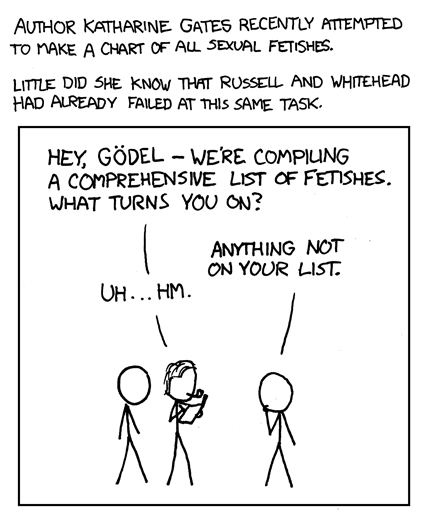
I felt Anne Fausto-Sterling's argument was well articulated and mostly valid. In particular, I quite like the suggestion that there are more than three or so human sexual behaviors, although any attempt to make a complete list may only cause further problems as it can never be completely inclusive (and I cite this XKCD comic as evidence to that)


When it comes to the debate of nature or nurture, I very much doubt it's fully one or the other. Of course just about any self respecting homosexual (Or heterosexuals for that matter) will tell you it's not a choice, but there's statistical evidence to support those who were victims of sexual abuse at a young age are themselves more likely to sexually abuse young people. 

Tone.
Her tone is somewhat passive, using phrases like "Many feel..." "Others think..." etc., but her stance is still fairly clear. It's not a bad thing to cite other sources and bring in counter-arguments. Though I would have enjoyed specific examples of the Loveweb conversations, I understand why that might not be possible (I also very much enjoy the explanation of what a "listserve" is in the year 2000).

Political position.
It's fairly evident that Anne Fausto-Sterling is bringing in feminist ideals in her argument, and while I may be very biased due to agreement, I think it helps strengthen her argument. It's mentioned in the first chapter how molecular biologists don't think much of feminist conferences or Loveweb debates, but it really should be brought into the conversation. I know we as humans tend to think of ourselves in a higher regard, but is it really too brash to think our sex/gender may be more complex that of, "yeast or bacteria"? I feel bringing in social realities is ultimately what will bring us closer to "truth" and "reality."


Nature vs. Nurture 2.0

I think I enjoyed reading Fausto-Sterling a lot better than I did Ogas and Gaddam. I feel like Fausto-Sterling approached the topic of sexuality in a much more open and willing to learn attitude, where as Ogas and Gaddam already had their minds set on men and women and the clear-cut distinctions between the two and why they act the way they do. I feel like while reading Gaddam I was reading material that I already knew, like we discussed in class, but while reading Fausto-Sterling there were new arguments presented on how gender is socially (and politically, in a sense) constructed. Fausto-Sterling was a bit more difficult to read in my perspective, because it was more scientifically and historically based and she put up some difficult questions and tested the beliefs of how gender has been socially constructed. She puts questions up against society that made me question not just the idea of men and women, but how instincts and biology shape gender and the meaning of a "man" and a "woman". One part that really stuck out in my mind was on page 23 when talking about Elizabeth Grosz, a feminist philosopher. Fausto-Sterling states, "She believes that biological instincts or drives provide a kind of raw material for the development of sexuality. But raw materials are never enough. They must be provided with a set of meanings, a 'networks of desires' that organize the meanings and consciousness of the child's bodily functions." I strongly agree with this statement, because I believe that biology plays a role in everything, to an extent, which is defined here as the "raw material". Then, that raw material is used to create meaning; to create gender. The sex of someone is biologically there, it is the gender that can be created, and that is why I strongly agree with Grosz.

I think that Fausto-Sterling works as an intervention because she takes into consideration more of the social and political aspects of gender that Gaddam. I think that she expands on these issues and gives more logical reasoning that is more believable in my opinion. By testing questions of gender and society, it takes a bit of a "time-out" from Gaddam and looks into issue more deeply. I think that Gaddam looks at gender on the surface, and Fausto-Sterling looks at it much deeper.

What'll it be?


Let's be honest:  when compared to A Billion Wicked Thoughts’ pseudo-science, almost anything looks better by comparison (data mining to support "scientific research"…really?), but Anne Fausto-Sterling’s eloquence does a particularly good job of revealing the more subtle points ABWT tramples over in an attempt to point out the already-obvious.  Whereas Ogas and Gaddam feel the need to point out they’re conducting “the world’s largest experiment” in a elephant-hiding-behind-a-bush attempt to make money, Fausto-Sterling quietly backs up her assertions with 200 pages of notes and a well-formatted bibliography—in other words, actual proof. 

In case you’re not getting the message here, allow me to be so bold as to whip out another one of my renowned metaphors:  say you walk into an ice cream shop.  On your left is Ben and Jerry’s Chunky Monkey—velvety smooth banana ice cream surrounded by large chunks of walnut and dark chocolate.  Delicious, but intense; I mean, there’s no way you’d ever mistake this stuff for green tea sorbet.  On your right is Haagen-Dazs' award-winning vanilla bean.  Now, some may call vanilla “boring," but vanilla has just as much to offer as the next flavor—you just have to be willing to take the time and be willing to exert the effort to savor it.  Can you guess which flavor is characterizing A Billion Wicked Thoughts and Sexing the Body, respectively?

            …I’m not keen on revealing my opinion for Ogas/Gaddam or Fausto-Sterling’s works because I think they hint at two equally important sides of an even more important issue.  A person (or, perhaps more apt here, a consumer) may have his or her interest peaked by A Billion Wicked Thoughts only to move on to Sexing the Body at a later point in time—again, the important thing to keep in mind here is that they both play a role in leading to the same core, unifying message.  I mean, sometimes you want your vanilla bean, but others…well, I’d be lying to you if I’d say that there haven’t been nights when only Chunky Monkey would do.

Anne Fausto-Sterling vs Ogas and Gaddam


I would like to start this post off explaining why I have been so quite in class lately (other then the terrible head cold I have been fighting lately, Thanks for singling me out Ben!) While we were discussing A Billion Wicked Thoughts in class I did not raise my hand to say exactly how I felt even though I was screaming inside. My reasons for being so quite lately are partially because I do not particularly enjoy speaking in front of a large audience and because conversations  or readings about sex, porn and human sexuality have never been a comfortable topic for me.  That being said I got out of my comfort zone and I was pleasantly surprised after reading the first chapter “dueling dualisms” by Anne Fausto-Sterling. As I sat in the corner of my favorite coffee shop I found myself feeling submerged in the way that Fausto-Sterling makes her argument and continuously backs all of them up with incredible scholarly research. In class we discussed the matter-of-fact and arrogant tone that Ogas and Gaddam portray in A Billion Wicked Thoughts and how that turned many of us off to the message they were trying to send to their audience. I found myself more angered that a book could have this effect on me that left me feel less then interested.  However, Fausto- Sterling grabbed my attention while she discusses sexuality and the history behind it. In very much detail she explains how perception of sexuality has changed over time and through different cultures concluding that it is constructed socially. One example Fausto-Sterling offered that stuck out to me was regarding Ancient Greece (Of course the Greek girl likes anything that has to do with Greece) She described how in Ancient Greece it was perfectly acceptable for a young male to interact and have relationships with older men but in todays society this would be considered illegal and the man would be deemed a pedophile. This example got me thinking how my perceptions about sexuality whether it is regarding heterosexuality, homosexuality etc. have been shaped by the culture that I currently live in.  Also, how the perceptions that I have about sexuality have been shaped by my family traveling and living in different countries and cultures in Europe while I was young .
 While reading this chapter one place where I got confused was on page 17  and the diagram Fausto-Stering included. I am hoping we will discuss it in class or that someone on here might be able to comment and explain it better to me. I must have re-read it over and over again but somehow missed the point. I think I will enjoy reading Sexing the Body much more then A Billion Wicked Thoughts because in short I feel like I am learning something that has room to be discussed and debated verses having something shoved down my throat by Ogas and Gaddam.(They sound like pricks)
Sidenote: Never read Sexing the Body in a coffee shop without a book cover… I got three people who asked me what kind of a book it was and why I was reading it.